Math games kids actually ask to play.
These aren't drill apps with cartoon stickers glued on. Every math game here is a small lab — your child builds, predicts and tests, while Ako the AI tutor watches and talks with them about what's happening. Built for ages 7–12 (grades 2–8).

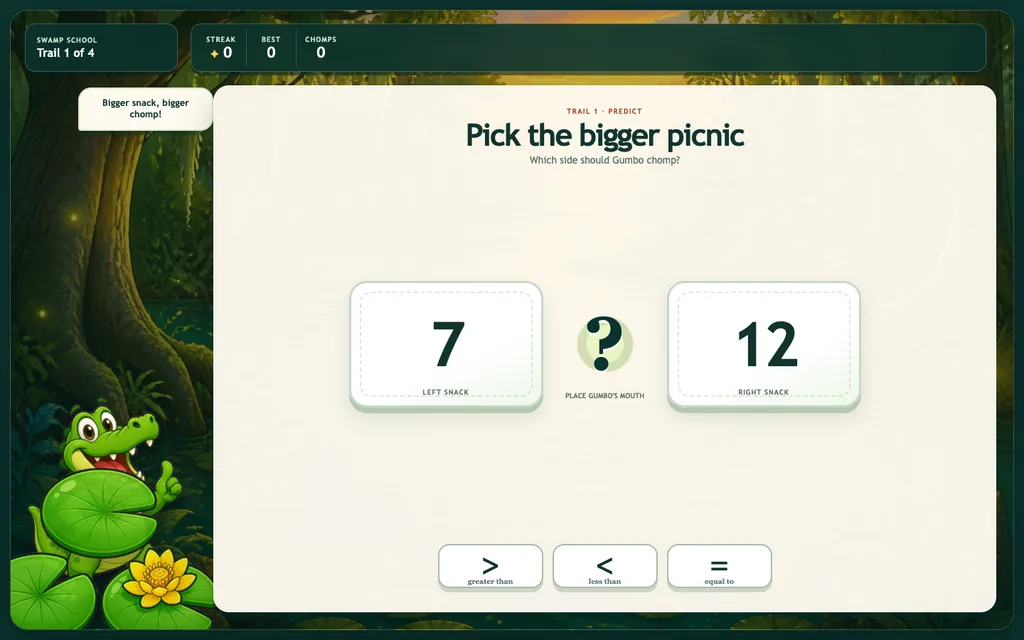 Mathematics · Ages 6-10Gator Chomp
The symbols > and < open toward the greater value, while = shows equal values; comparing place values lets us use the same relationship for whole numbers, decimals, fractions, and ordered sets.
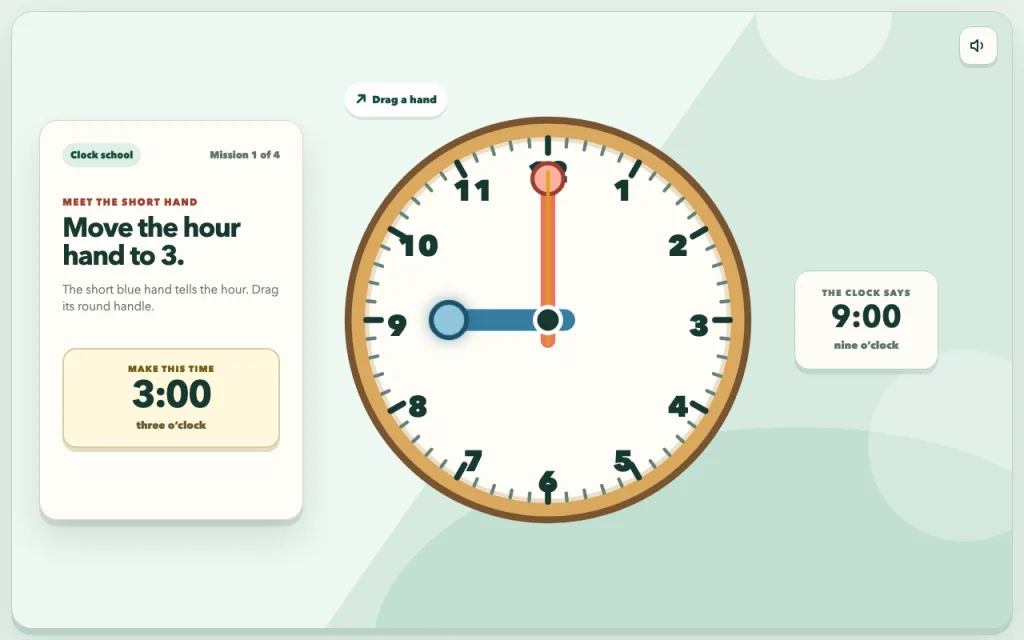 Maths · Ages 6-11Clock Workshop
A clock’s short hand points to the hour and its long hand points to the minutes; reading both hands together tells the time.
Mathematics · Ages 5-10Clock QuestThe short hand shows the hour and the long hand counts minutes around the clock; reading or setting both hands together makes one exact time.
Mathematics · Ages 6-11Times Table ArenaA multiplication fact counts equal groups: a × b is a equal rows with b in each row, and the product is the total across every row.
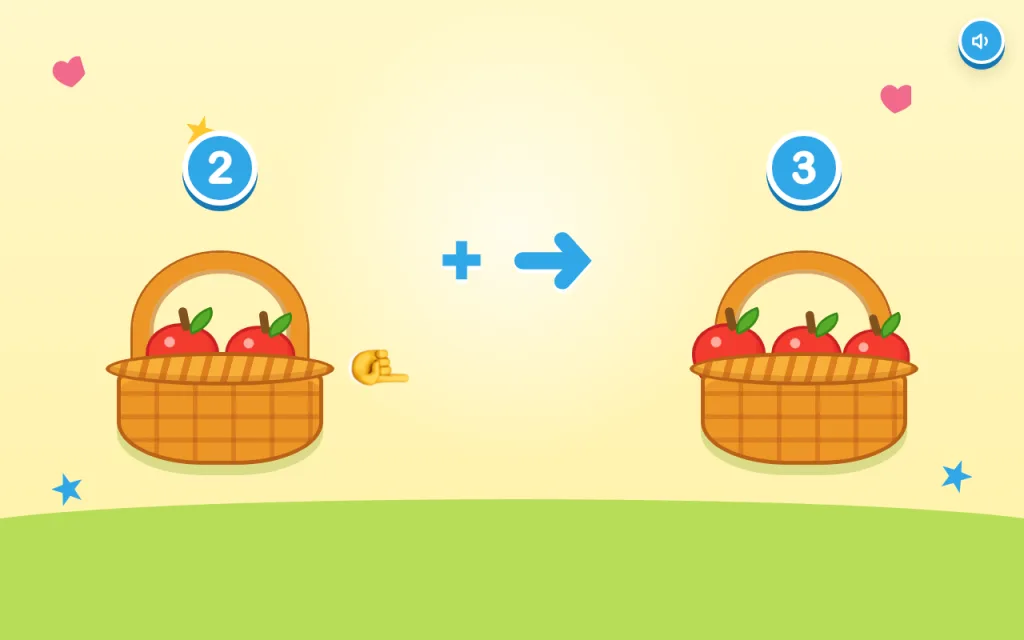 Mathematics · Ages 5-7Apple Add
Adding means putting groups together and counting every object in the new whole group.
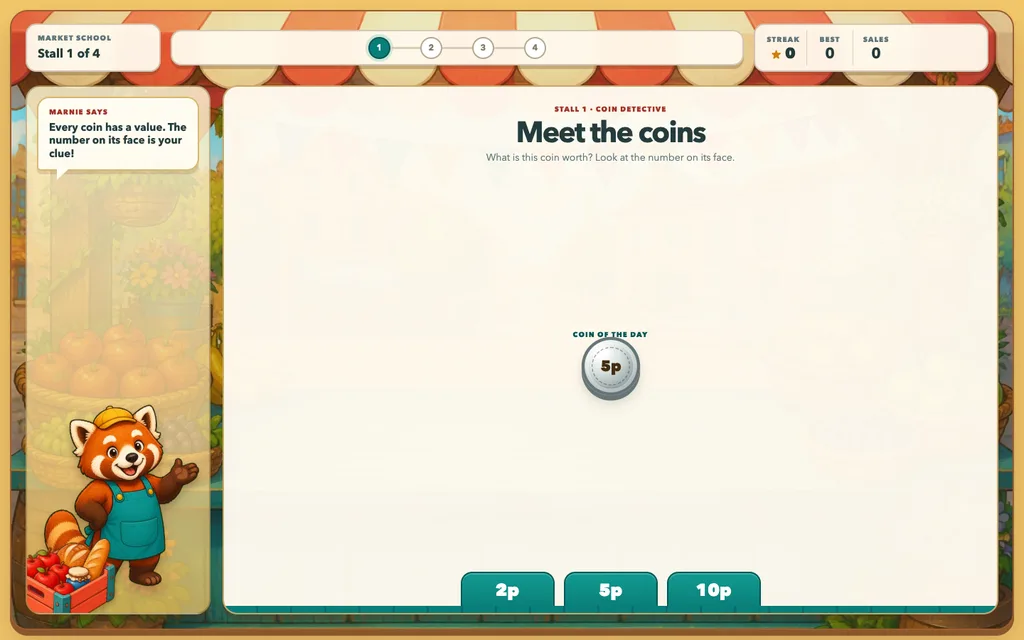 Mathematics · Ages 6-10Money Market
Money amounts are totals of coin and note values; exact payment matches a price, while change is the difference between what was paid and what it cost.
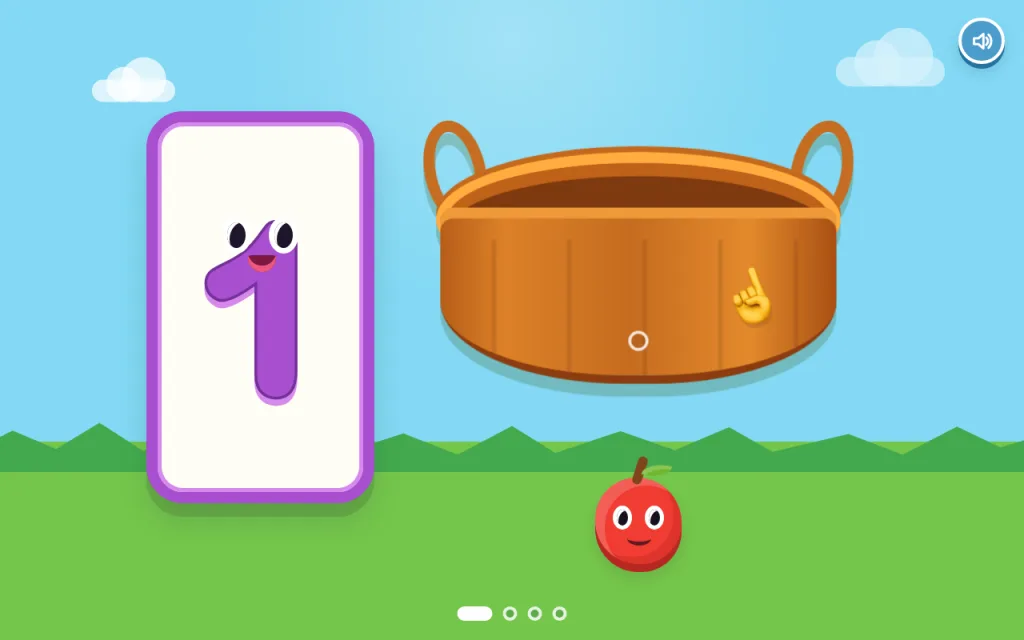 Early Mathematics · Ages 4-6Number Friends
Each numeral stands for an amount: the numeral 3 means three things.
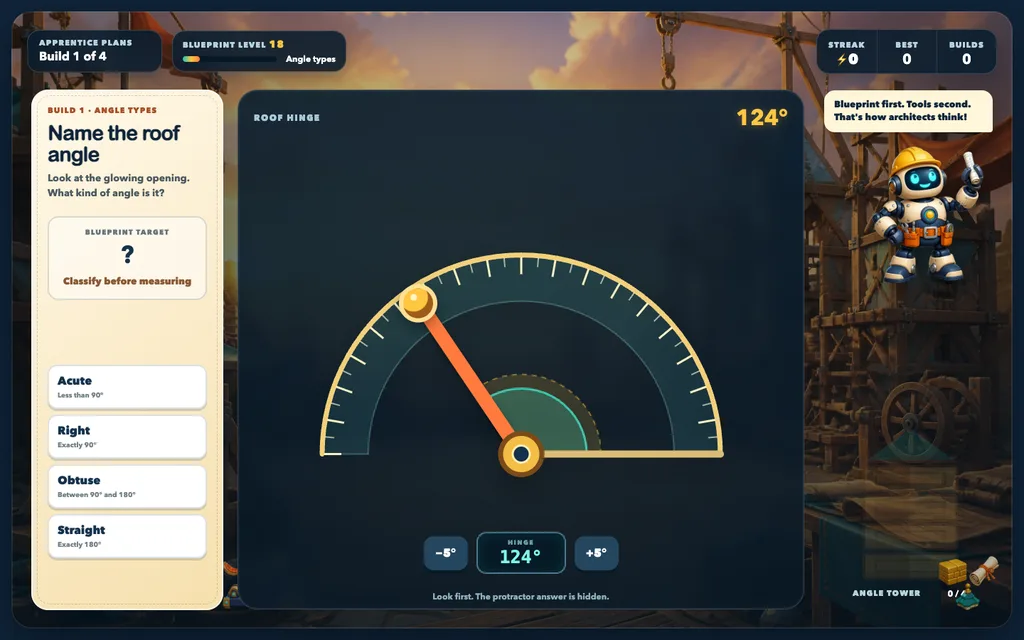 Mathematics · Ages 9-13Angle Architect
An angle measures the amount of turn between two rays: angles range from acute through reflex, a protractor reads the inside turn from 0° to the degree, and missing angles can be found from 90°, 180°, and 360° totals.
Mathematics · Ages 7-12Area & Perimeter ParkArea counts the square units inside a shape, while perimeter measures the unit lengths around its outside boundary; equal areas can have different perimeters.
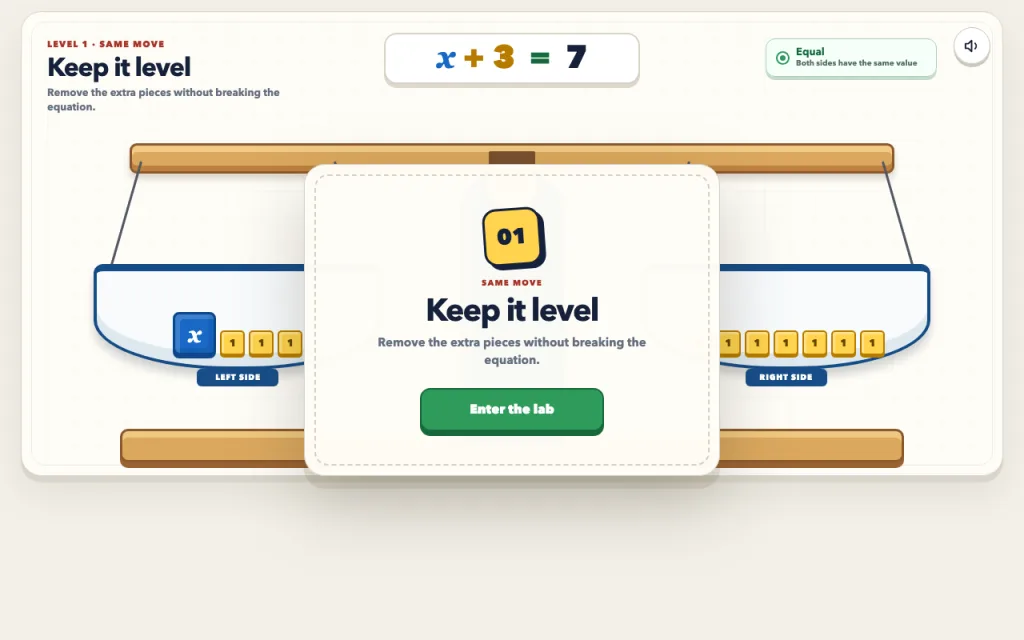 Mathematics · Ages 11-13Balance Lab
An equation is a balance: doing the same thing to both sides keeps it equal and can isolate x, while unequal changes break equality.
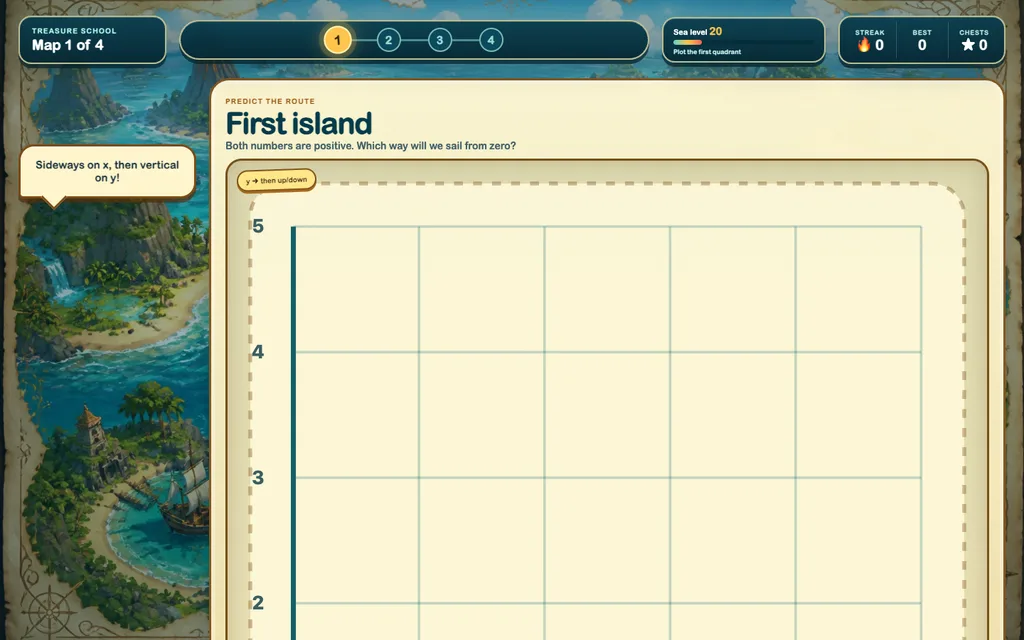 Mathematics · Ages 9-13Coordinate Quest
A coordinate pair (x, y) gives an exact location: move horizontally along x first, then vertically along y; negative values reverse the direction from the origin.
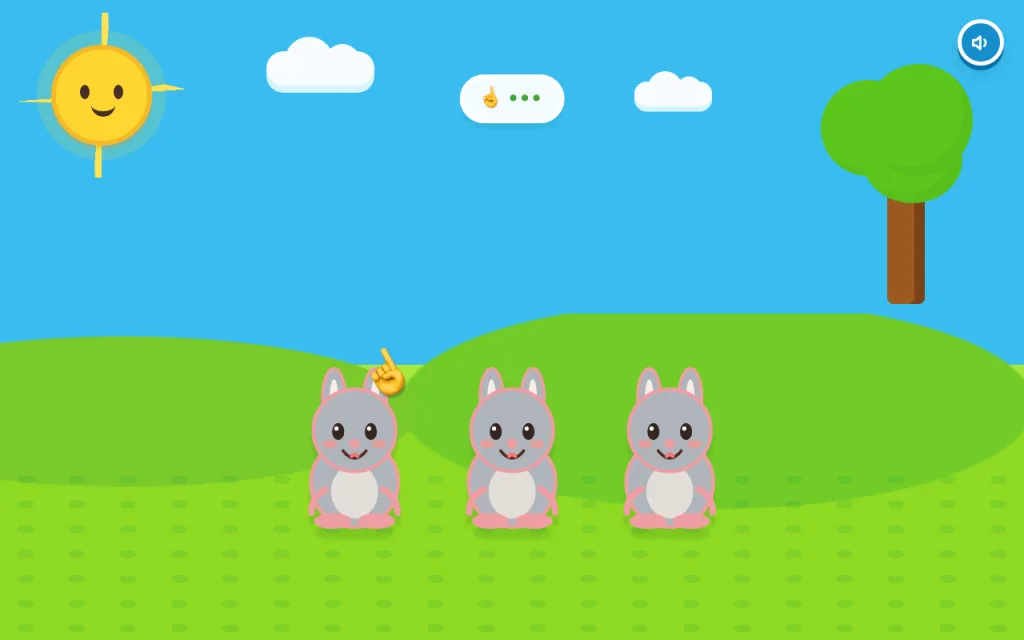 Early Mathematics · Ages 4-6Counting Critters
Counting tells how many: give each thing exactly one number, and the last number counted is the total.
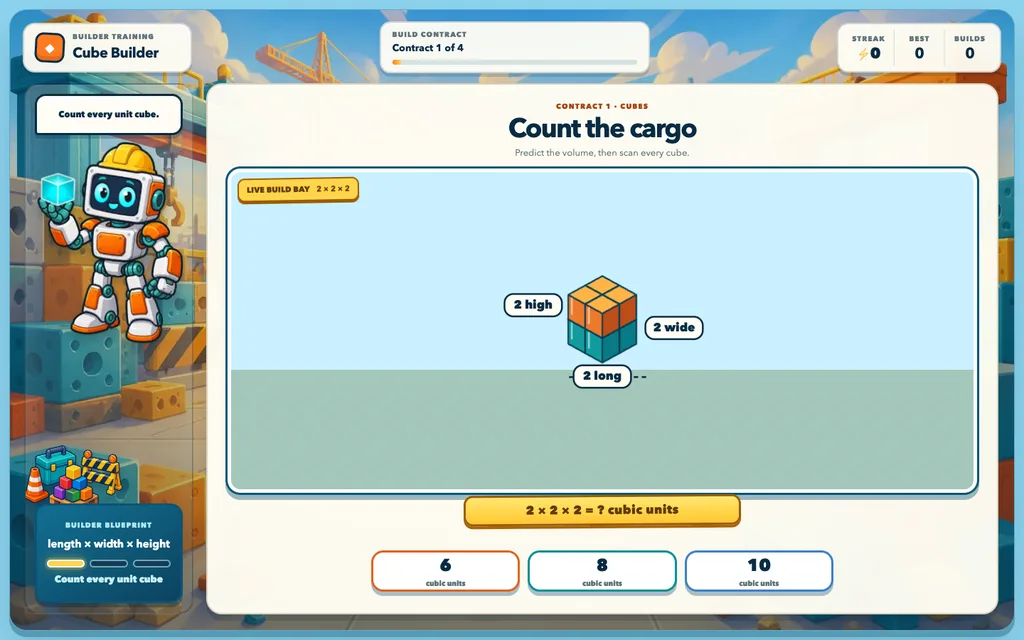 Mathematics · Ages 9-13Cube Builder
Volume is the number of unit cubes that fill a three-dimensional solid; equal layers show why length × width × height counts every cube inside.
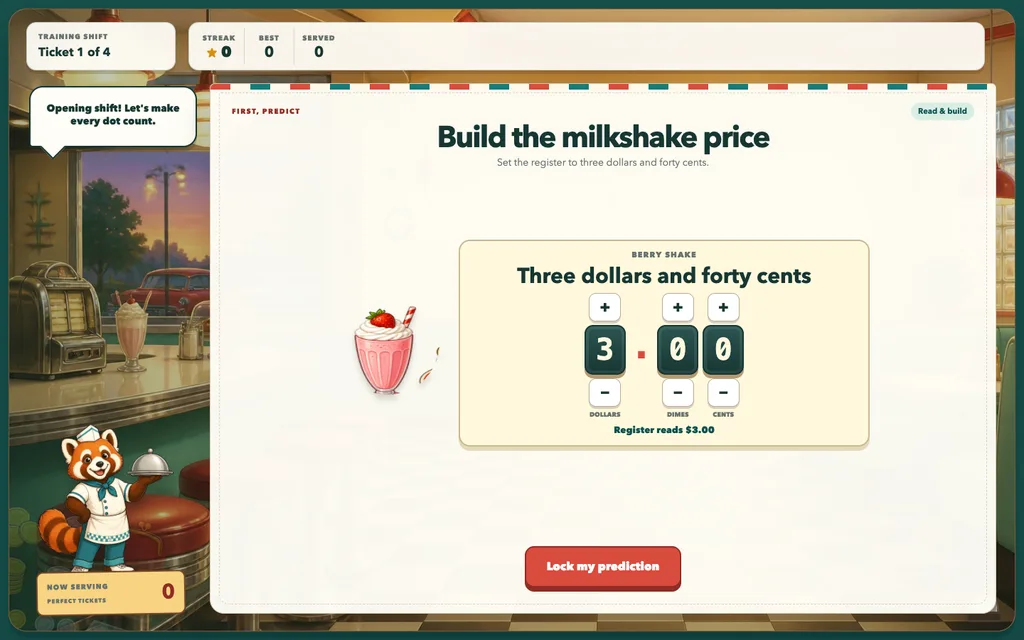 Mathematics · Ages 9-13Decimals Diner
A decimal point anchors place value: decimals can be read, located, compared, rounded, scaled, added, and subtracted by tracking what every place is worth.
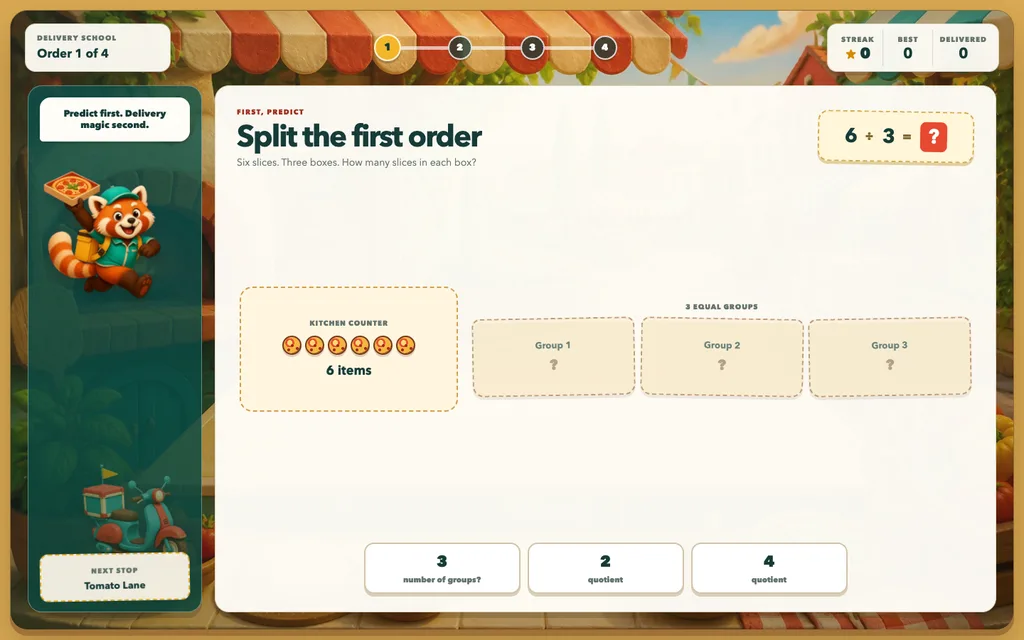 Mathematics · Ages 8-12Division Dash
Division shares a total equally: the quotient tells how many belong in each group (or how many equal groups can be made), and any amount left over is the remainder.
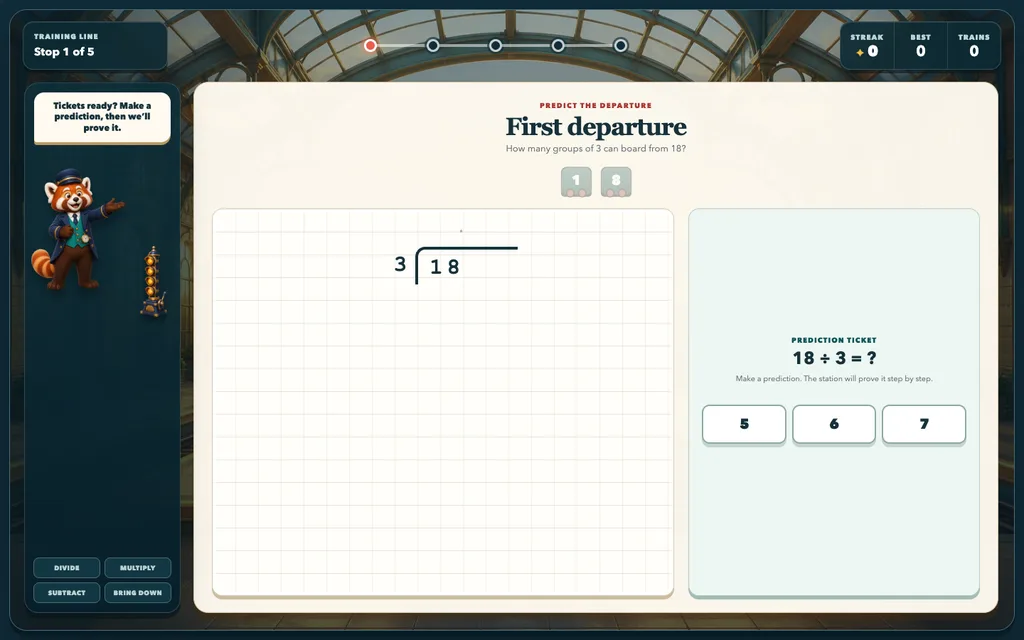 Mathematics · Ages 9-13Division Station
Long division repeats divide, multiply, subtract, and bring down; each cycle fixes one quotient digit, and the final leftover is a remainder smaller than the divisor.
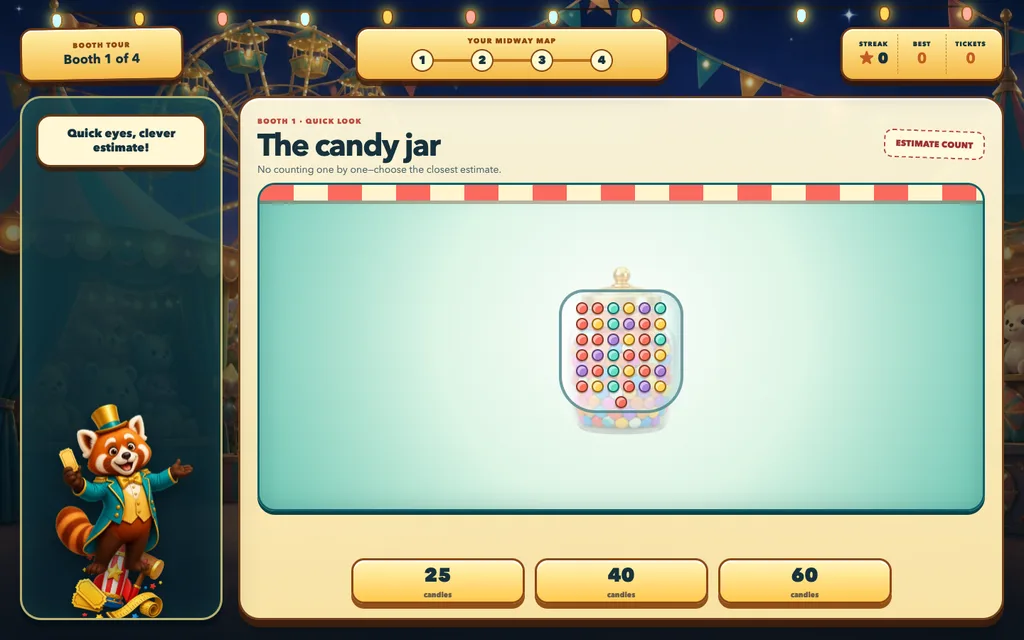 Mathematics · Ages 7-12Estimation Station
A useful estimate is a nearby, quick answer made with groups, familiar benchmarks, or rounded numbers; comparing it with the actual result helps us judge whether an answer is reasonable.
Mathematics · Ages 8-13Fraction FlipA fraction, decimal, and percent can name the same amount; equivalent forms fill exactly the same length of one whole.
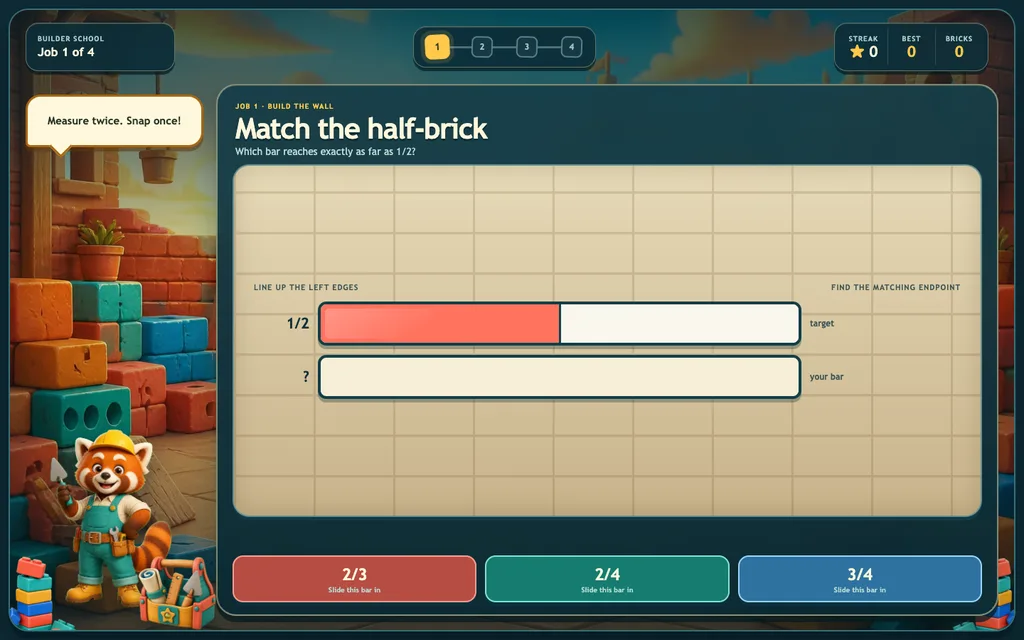 Mathematics · Ages 8-13Fraction Wall
Fractions are equivalent when they cover the same length of the same whole; lining bars up makes equivalence, comparison, and simplification visible.
Mathematics · Ages 8-13Grid RangerAn ordered pair (x, y) names one exact point by giving a horizontal x move from the origin first, followed by a vertical y move; negative values reverse those directions.
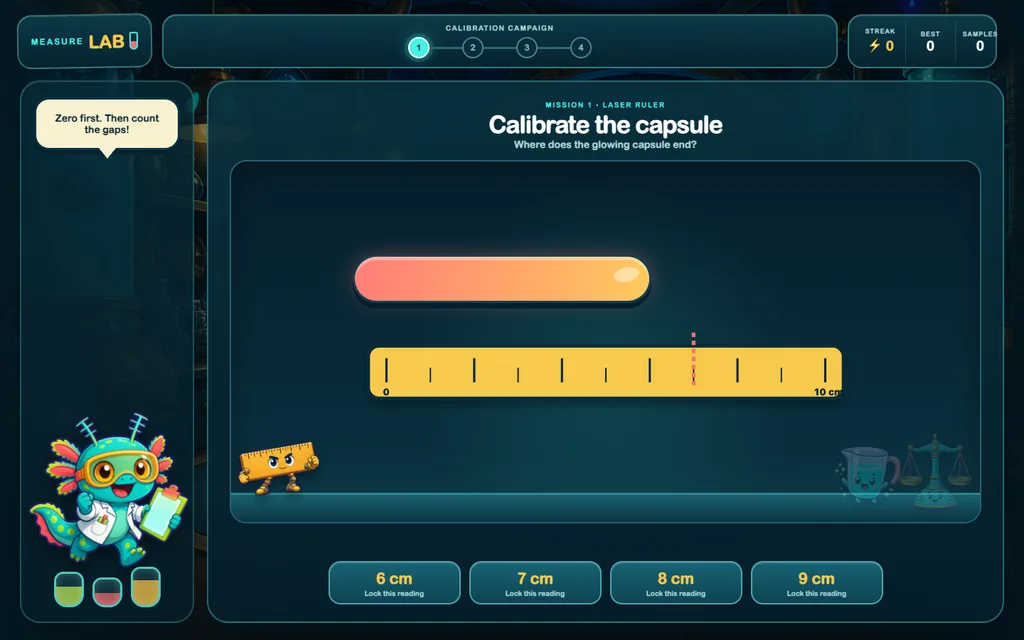 Mathematics · Ages 7-12Measure Lab
Measurements pair a number with a unit; instrument marks show equal intervals, and converting units changes the number without changing the amount.
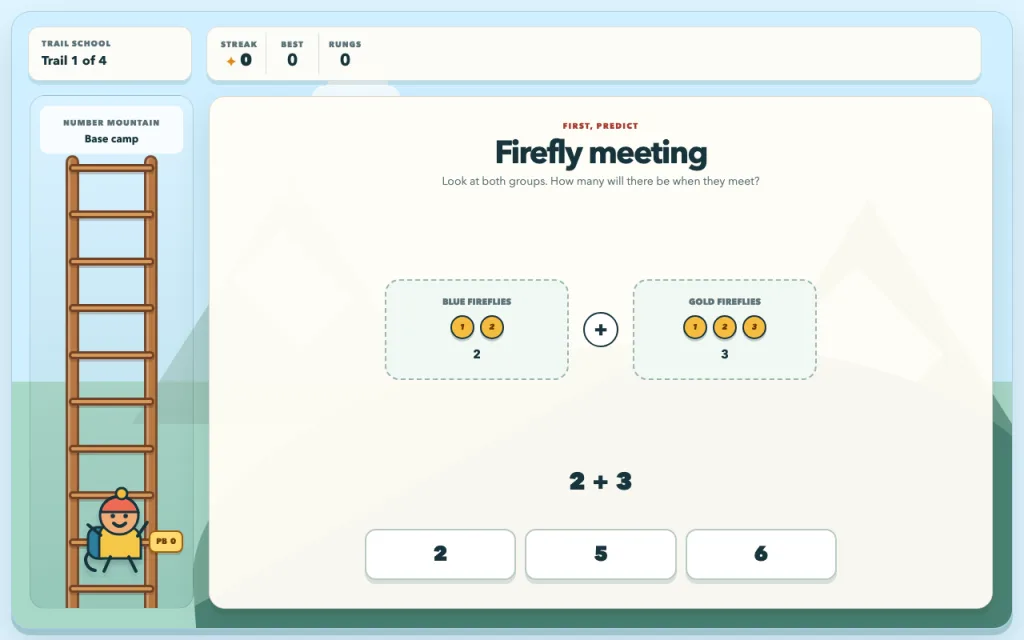 Maths · Ages 6-11Number Ladder
Adding combines every member of two or more groups into one total; the groups change arrangement, but no members disappear.
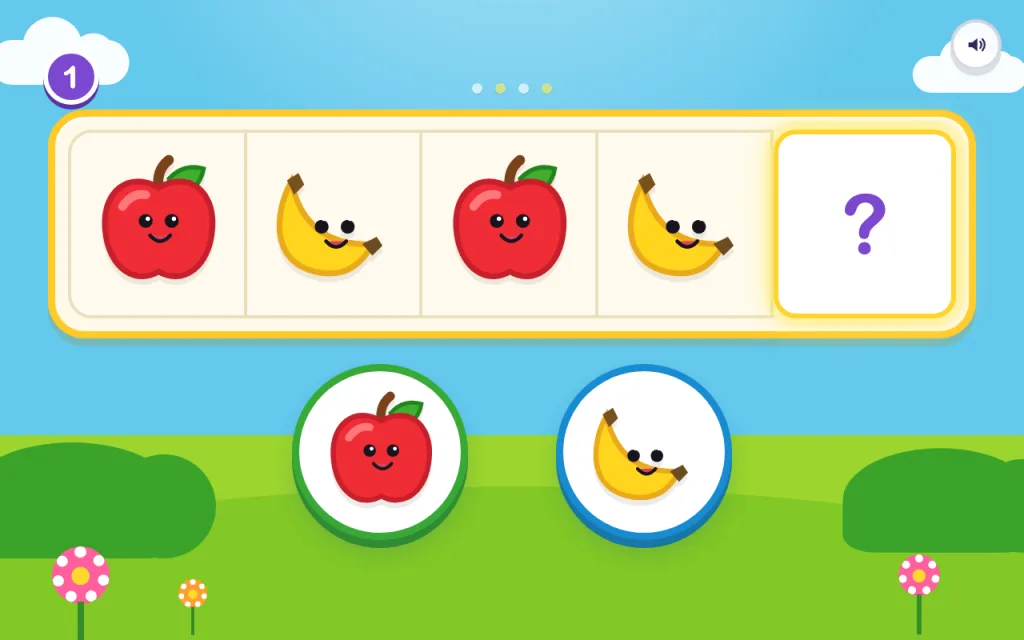 Early Mathematics · Ages 4-6Pattern Party
A pattern repeats; once you spot the repeat, it tells you what comes next.
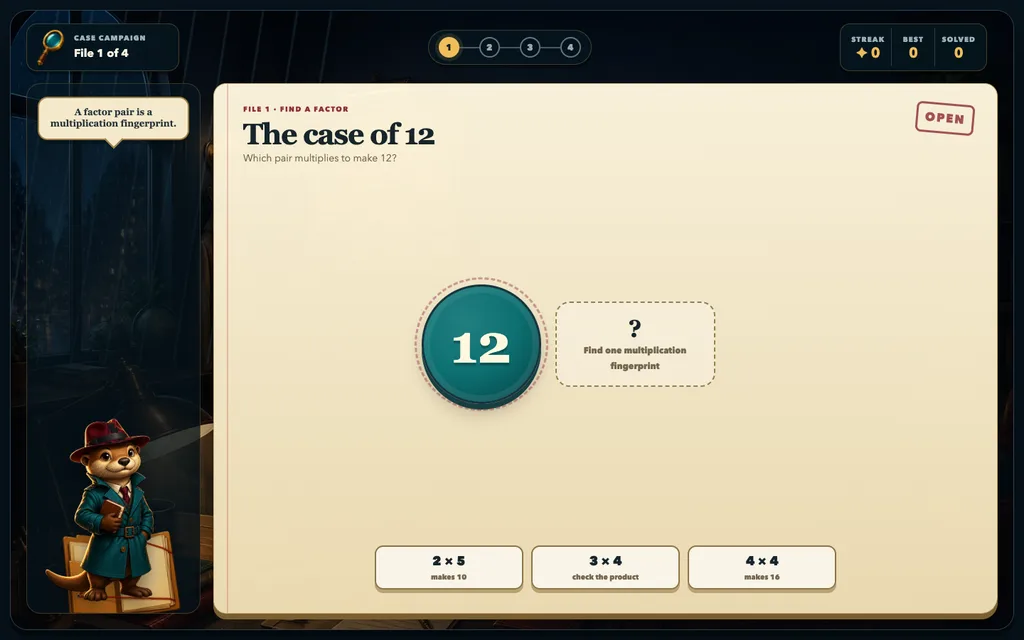 Mathematics · Ages 9-13Prime Detective
A prime number has exactly two factors, 1 and itself; a composite number has additional factor pairs, which can be found by testing divisors only up to its square root.
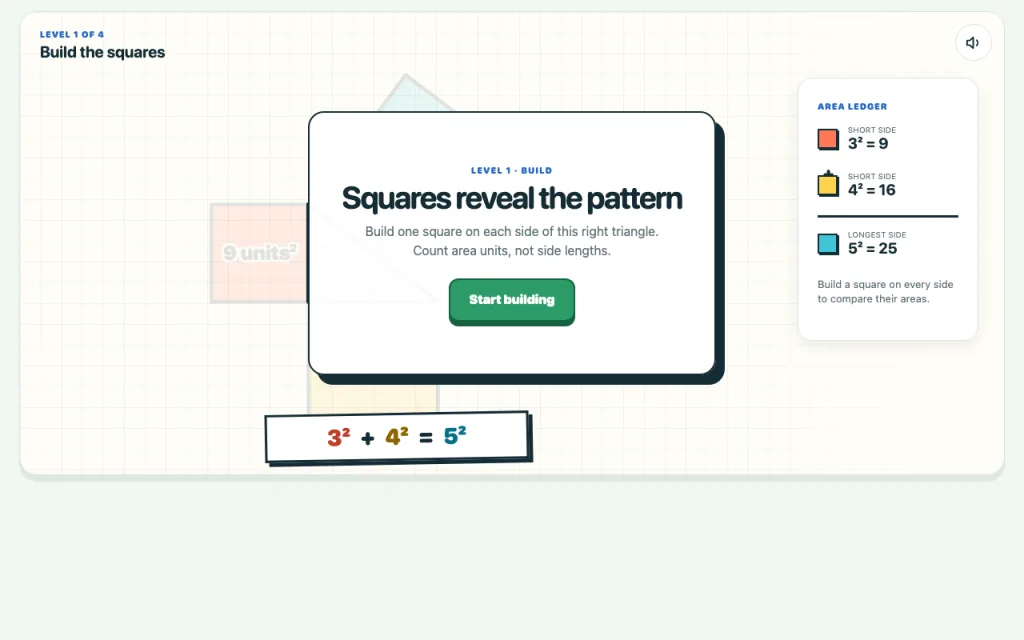 Mathematics · Ages 11-13Pythagoras Builder
For a right triangle, the square areas on the two short sides together exactly equal the square area on the longest side: a² + b² = c².
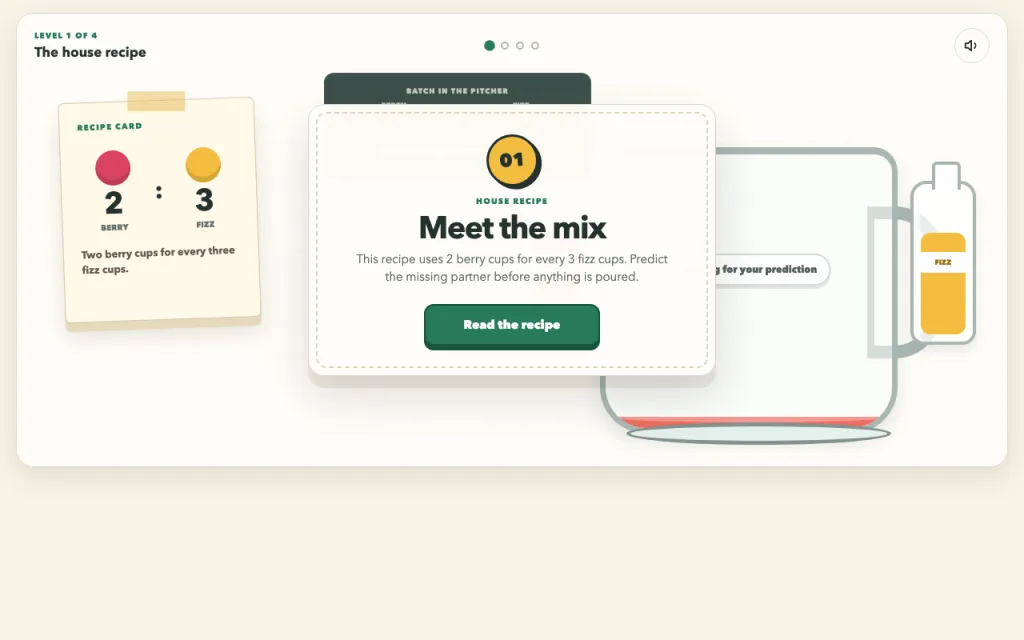 Maths · Ages 10-13Ratio Recipe Mixer
A ratio stays the same when both quantities are scaled by the same factor, so equivalent ratios make the same mixture.
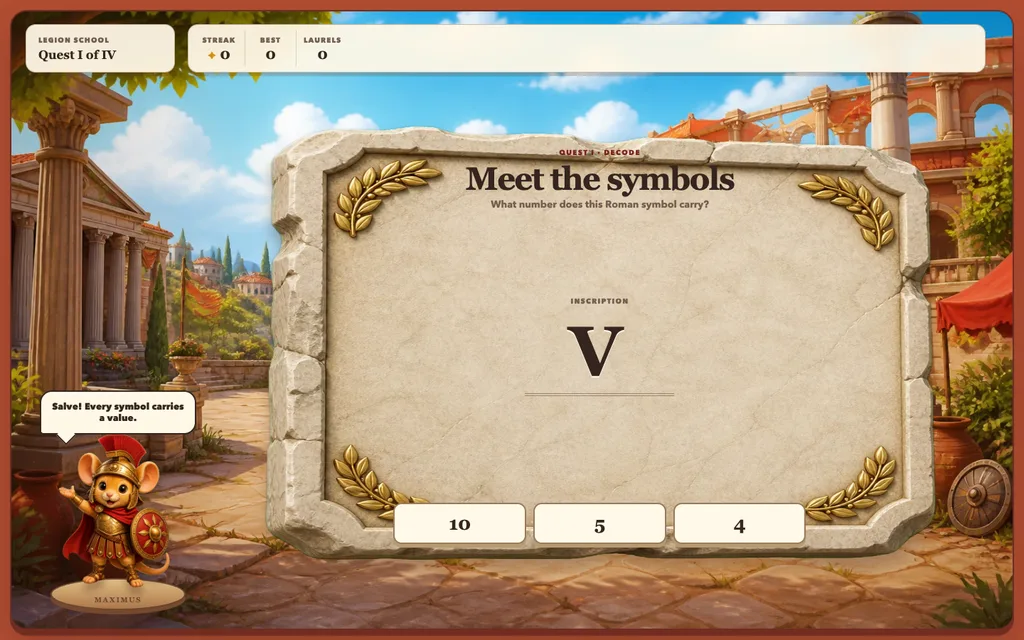 Mathematics · Ages 8-13Roman Quest
Roman numerals use symbols with fixed values; reading from left to right usually adds them, but a smaller value before a larger value is subtracted.
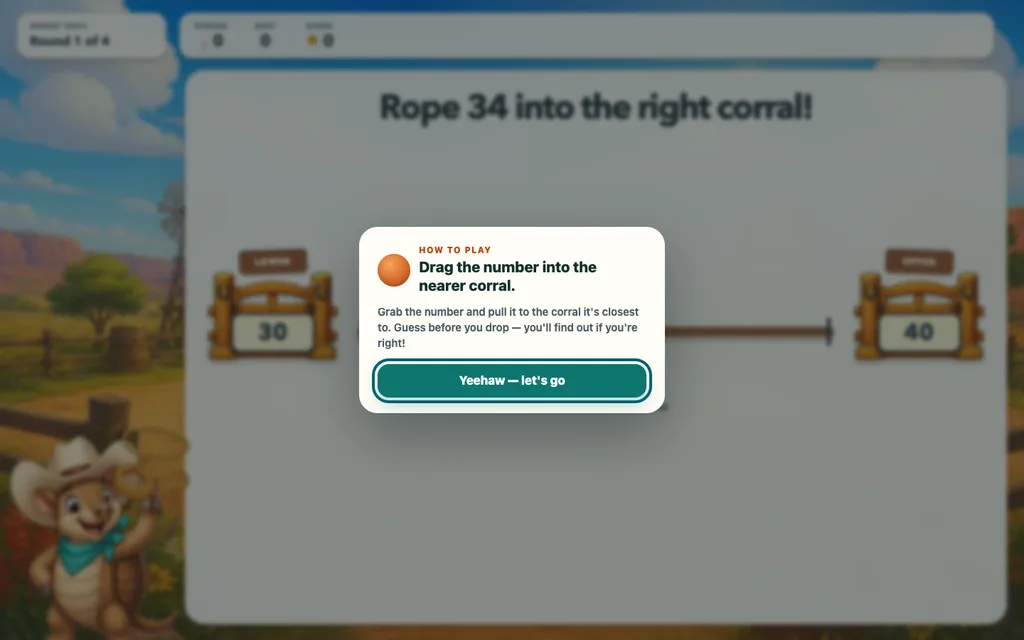 Mathematics · Ages 8-12Rounding Rodeo
To round a number, place it between two neighbouring round numbers and choose the closer one; an exact midpoint rounds up.
Mathematics · Ages 5-10Shape SpaceA shape keeps its identity when it turns, changes size, or appears as an everyday object; its straight sides and corners identify a 2D shape, while faces, edges, vertices, and curved surfaces identify a 3D solid.
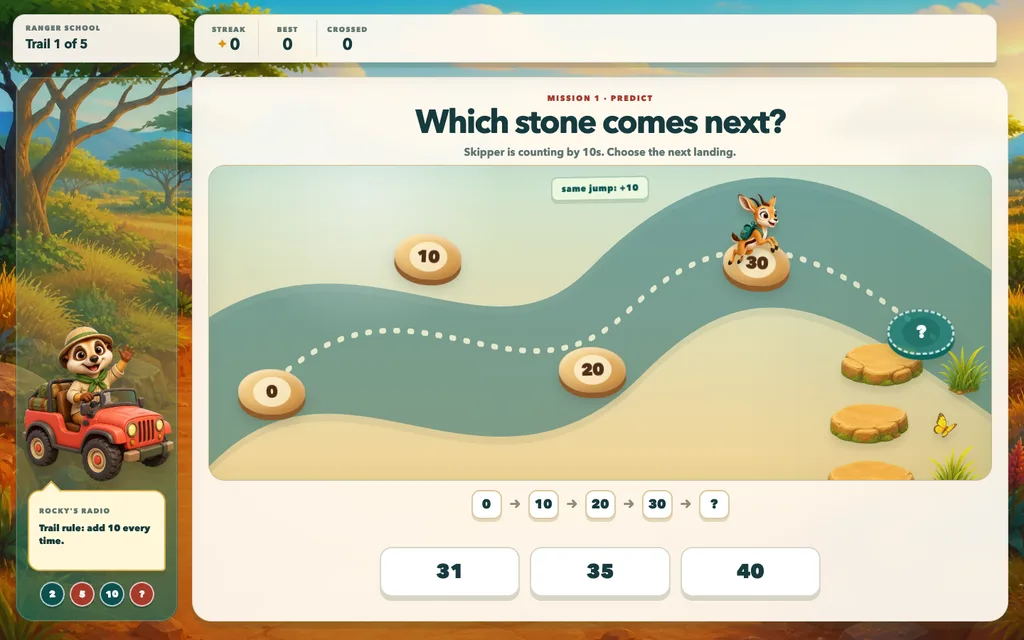 Mathematics · Ages 5-9Skip Count Safari
Skip-counting makes equal jumps on the number line; each landing adds the same amount, so the number of jumps connects directly to multiplication.
 Mathematics · Ages 11-13Slope Skatepark
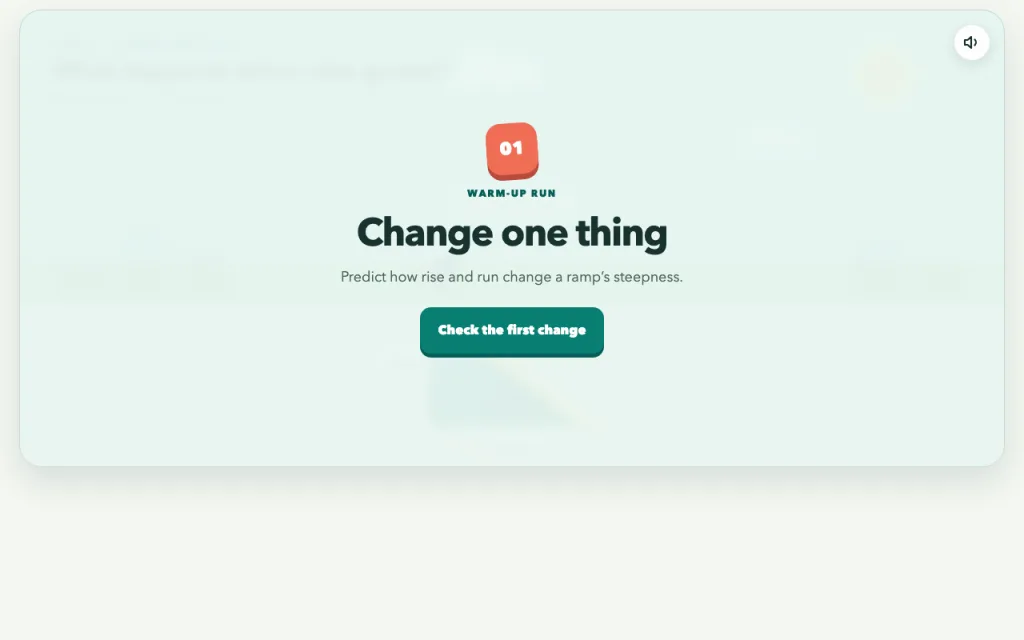
Slope is steepness measured as rise divided by run: a bigger ratio is steeper, and equal ratios are equally steep.
 Mathematics · Ages 9-13Stat Squad
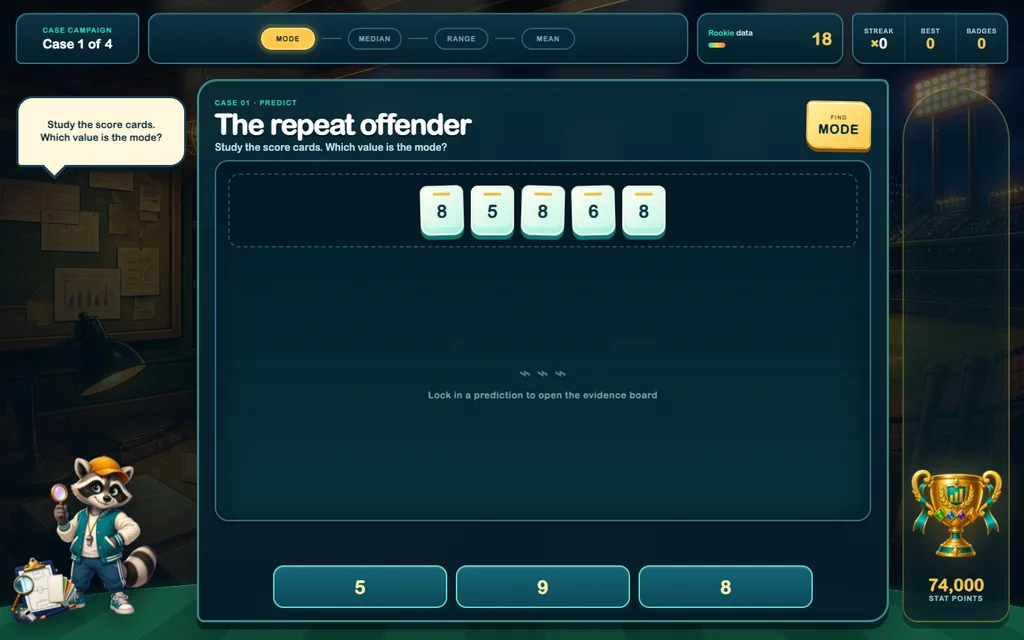
Mean, median, mode, and range describe different features of the same data: equal share, ordered middle, most frequent value, and total spread.
Mathematics · Ages 7-12Story ProblemsThe action in a story tells us which operation connects its numbers; representing that action as a number sentence makes the answer explainable.
 Mathematics · Ages 7-12Symmetry Studio
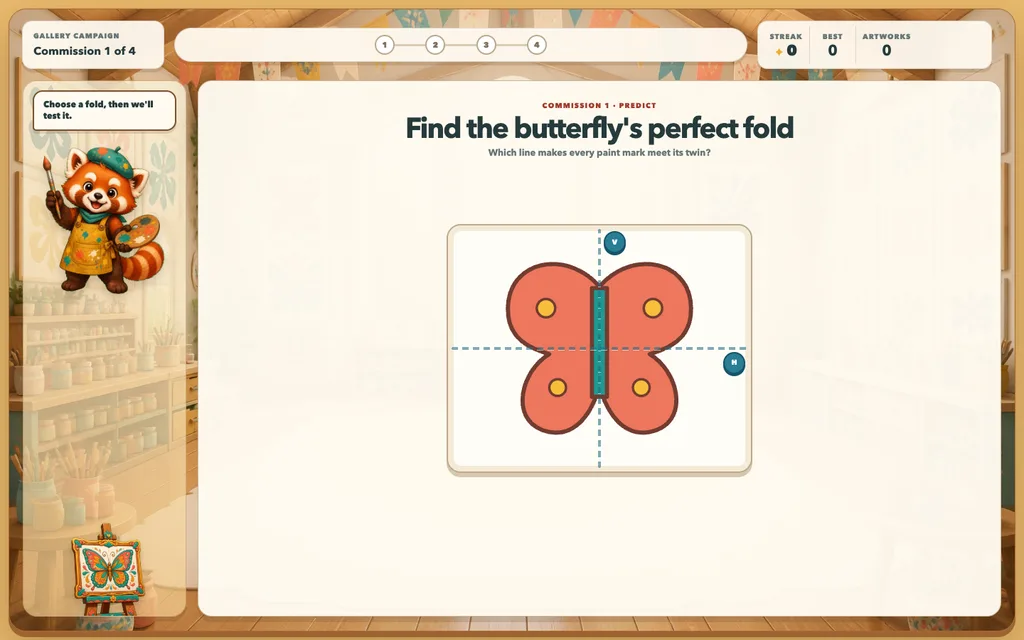
A line of symmetry is a fold line that pairs every point with a matching point the same perpendicular distance on the other side; a shape can have none, one, or several such lines.
 Mathematics · Ages 8-12Time Station
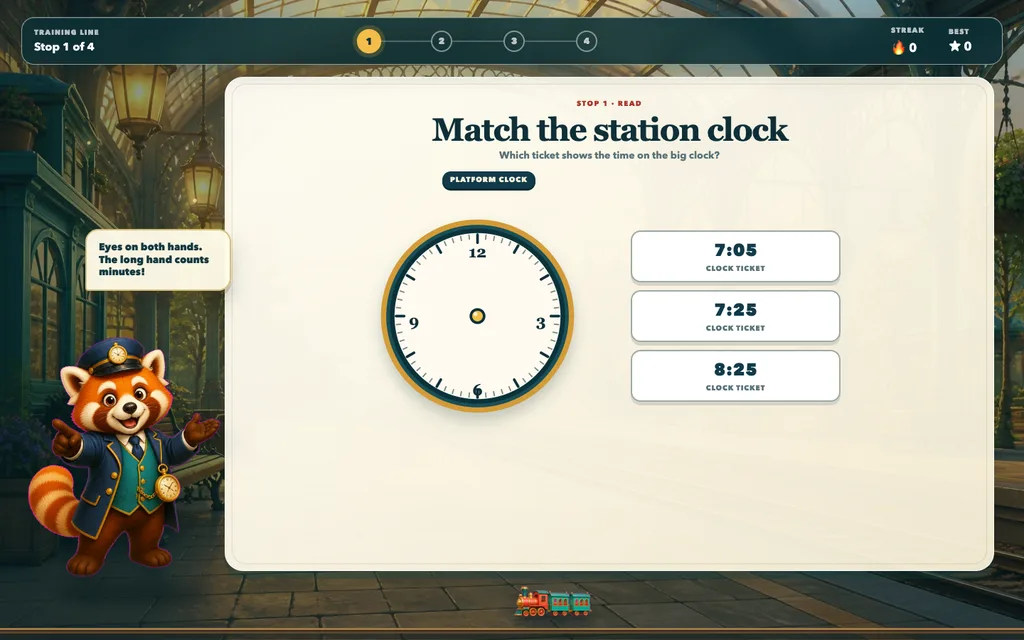
Elapsed time is how far a clock moves forward from a start time to an end time; counting on through friendly hour boundaries makes that journey visible and reliable.
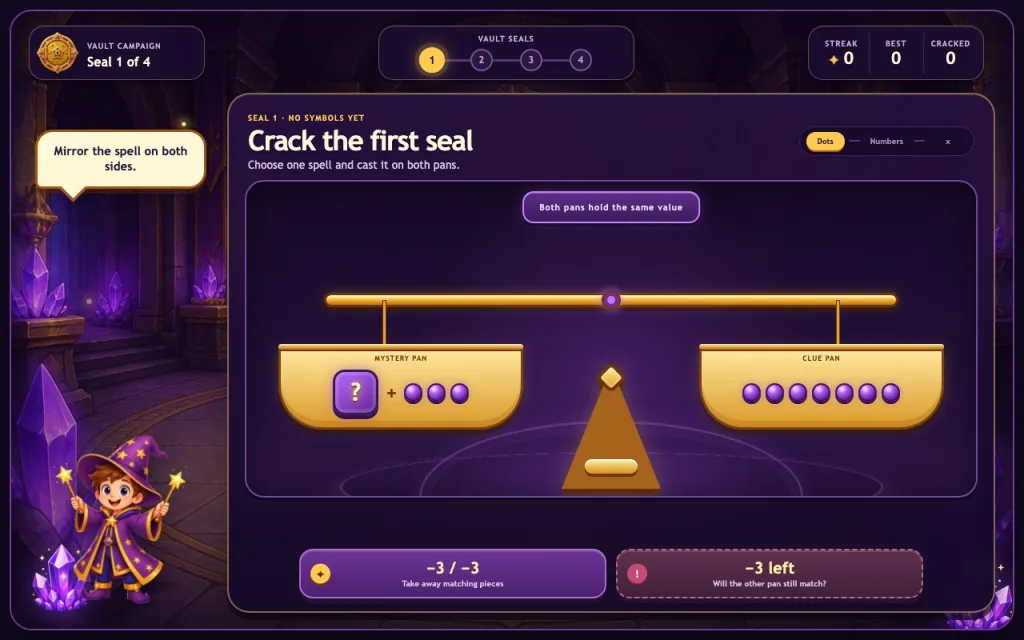 Mathematics · Ages 10-13Vault Cracker
An equation is a balanced scale: doing the same move to both sides keeps it equal, and inverse operations isolate the unknown so its value can be revealed.
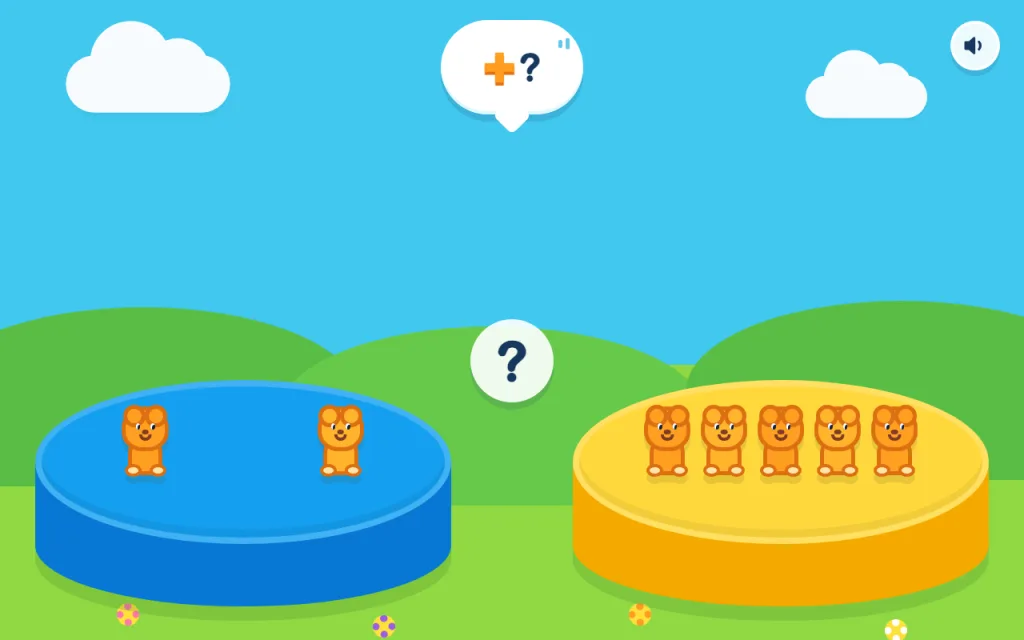 Early Mathematics · Ages 4-6Which Has More?
One group can have more, fewer, or the same number of things, and counting tells which for sure.
Every game comes with Ako.
Ako is a voice AI tutor who lives inside the lesson — he sees what your child builds, asks what they think will happen, and never just gives the answer. Then he writes to you each week about what clicked. Covers the concepts kids meet in elementary and middle school.
Questions parents ask
Are these maths games free?
The first lesson is completely free with no account. After that it's a simple subscription that unlocks every math, science and geography lesson.
What ages are they for?
Built for ages 7–12 (grades 2–8). Ako adapts how he talks to your child's age, and the games keep getting harder as your child improves.
How is this different from other maths games?
Ako — a voice AI tutor — is inside every game. He sees what your child builds, hears their reasoning, asks for predictions, and writes to you each week about what clicked.
Let your kid try one.
One free lesson. No account. If they don’t ask to keep going, don’t subscribe.
Try a lesson free$15/month after · cancel anytime